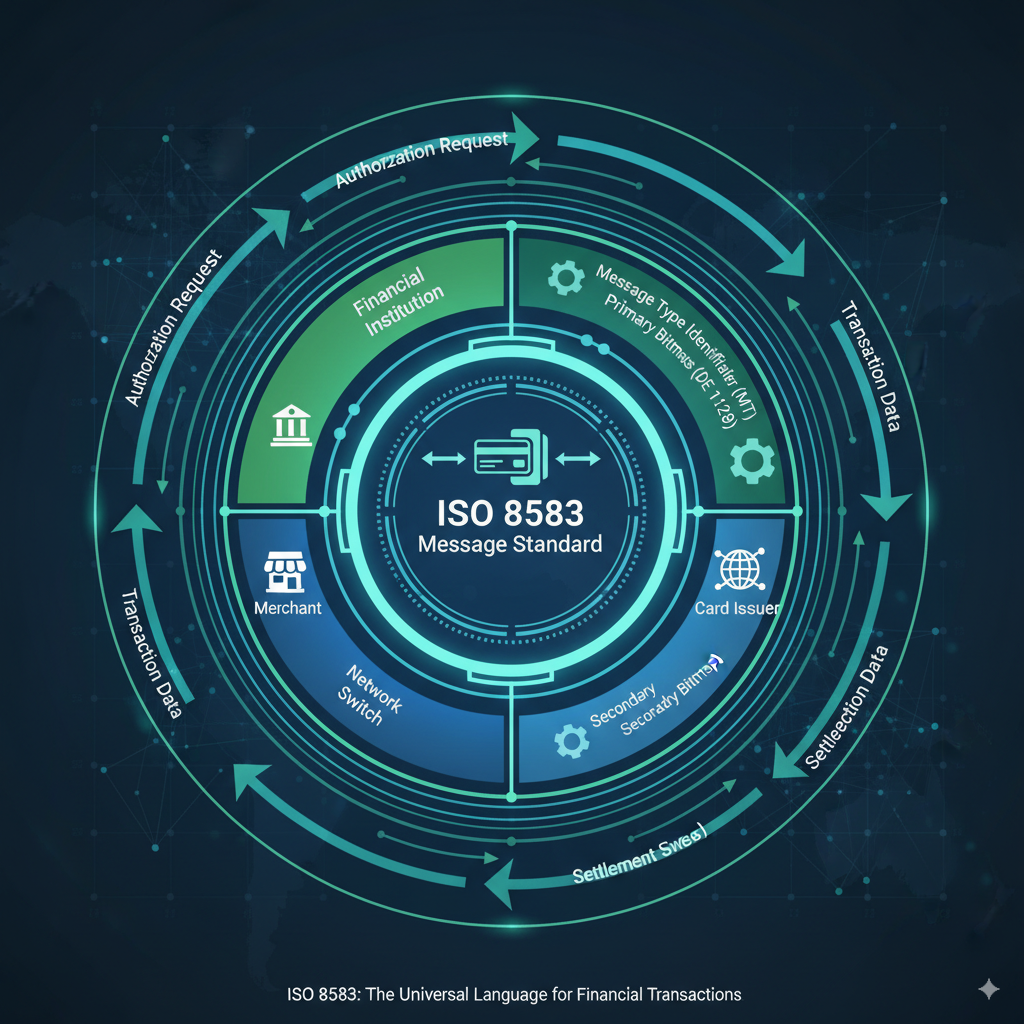
Today is Day 1 of the entire learning journey. As a start, we will be exploring more about ISO8583 and what it actually is.
ISO stands for the International Organisation for Standardisation—it is a non-governmental organisation that develops and publishes standards that apply globally. It can be for products, services, and systems. This way, everyone who adheres to it knows that there is a certain benchmark to follow in terms of consistency, safety, reliability, and quality across borders and industries.
Note: ISO can apply to a lot of things—from Cars (ISO 9001) to Food and Beverage Products (ISO 14001) and Medical Devices (ISO 13485).
But in this case we are referring to ISO 8583, which focuses on the payments industry.
A bit more about the history for ISO 8583: it was used to unite the different payment systems at that point in time.
ISO 8583 stands for the International Standard for Financial Transaction Card Originated Interchange Messaging.
This was important as it helped to define message format and even communication flows.
Evolution of ISO 8583
| Year | Changes/Focus |
|---|---|
| 1987 | - Defined Message Type Indicators (MTI) - Bitmaps & Data Elements - 128 Data Elements |
| 1993 | - Refinements & Clarifications - Flexibility for new Card Processing Services - New Data Elements and Message Types - Improved support for multi-currency, addressed inconsistencies and extended available fields |
| 2003 | - XML Representation (against traditional Bitmap format) - Better definitions for Data Elements (Beyond 128 Data Elements) - Better Support for International Use (Multi-Currency, different card systems) |
| 2023 | - Consolidated Previous Releases and technical revisions. - Restructured the standard for easier maintenance - Greater interoperability between new digital payment systems while maintaining backwards compatibility. |
There are also newer ISO standards in the card payments industry!
New ISO Technology:
ISO 20022